
Atomic Blonde has the espionage of Bond and the action of John Wick; with Charlize Theron portraying the stone cold, cool-as-ice, and stunningly sexy agent Lorraine Broughton.
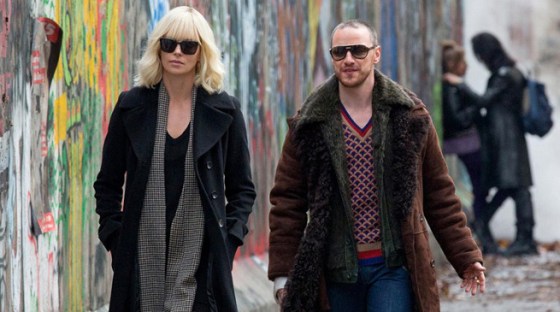
Set during the fall of the Berlin War in 1989, though not related to this historic event whatsoever, we follow MI6 Agent Lorraine Broughton in her journey to Berlin to investigate the murder of fellow agent James Gasciogne (Sam Hargrave) and to locate “The List”. As in many Cold War spy thrillers, “The List” is a piece of microfilm containing the names of all allied field agents active in the Soviet Union and, in true Bond style, the microfilm is hidden in a wristwatch. Unfortunately, things start going wrong for Lorraine as soon as the her killer heels touch the ground, but people soon find out she is a force to be reckoned with. Lorraine’s contact in Berlin is MI6 agent and station chief David Percival (James McAvoy) who seems to have adapted to his environment a little too well, being described in the film as “feral”, and has his own rules and motives.
The narrative is a re-telling of the events that took place in Berlin by Lorraine in an debriefing led by MI6 executive Eric Gray (Toby Jones) and CIA agent Emmett Kurzfeld (John Goodman). Throughout the film we are thrown, both seamlessly and abruptly, between Berlin and the London interrogation room, the questions posed to Lorraine driving the story forward and building doubt and suspicion regarding everyone’s intentions.

In stark contrast to the seriousness of other cold war and general spy thrillers, and even the background and plot of this film, David Leitch has used a combination of very stylistic components to create an entertaining, anarchistic and glam rock atmosphere. The garish neon lights, spray paint screen annotations, breaking the fourth wall, a steamy lesbian affair, a new wave score, and bold outfits give a lighter edge to this violent and bloody thriller. This style is reminiscent of films made in the ’90s depicting anarchy, disregard for rules or an anti-establishment message.
The contrast extends down to the counterculture depicted on both sides of the Berlin wall. In the West, everyone is free to dress and drink as they please, whereas, in the East, we see youths being punished for partying, the inevitable rebellion and revolution. This is reflected in Lorraine’s image as well as the atmosphere; in the West her dress and make-up is bold, provocative and punk, in the East she switches the sheer blonde for brunette and dresses plainly with minimal make-up.


The soundtrack is as killer as Theron; tracks from the likes of David Bowie, Kanye West, The Clash, Queen, Public Enemy, Health and New Order give the film power and emotion. What is particularly interesting is the use of the original song, plus a reprisal using a cover in a later scene with a very different mood. At some points this reinforced the direction of the plot, descents into chaos, loss of control and stings of emotion. With the help of composer and music supervisor Tyler Bates (composer for John Wick), Leitch has put together a playlist that compliments the non-verbal storytelling occurring in much of the film and reflects the environment and rebellion of the period.

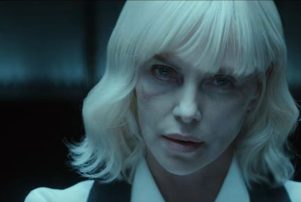
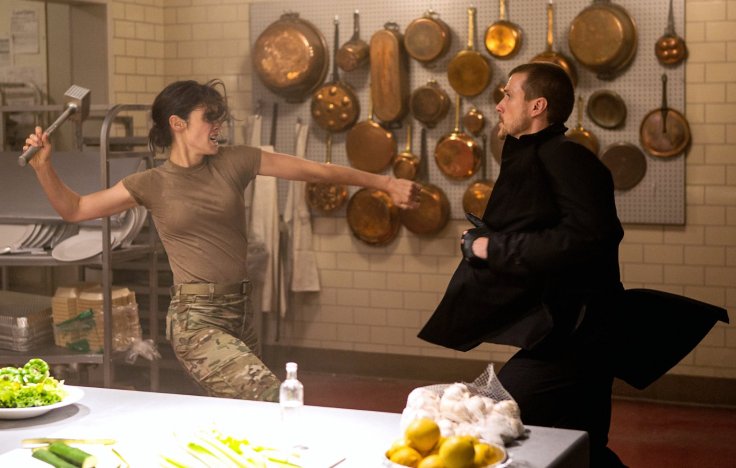
As well as a killer soundtrack, this film has absolutely brutal action sequences. David Leitch’s stunt background explains the satisfaction I got from watching those scenes; he has been stunt man, double, coordinator and co-director for a number of action-heavy films (Fight Club, 300, Bourne films, Matrix films, John Wick, and the upcoming Deadpool 2). The realism Leitch has injected here is impressive and effective; Theron insisted that she do as many of the stunts as legally permitted, training for months on her strength, wrestling and Muay Thai, and even getting a couple of sparring sessions in with Keanu Reeves!! Her style is what you would expect for a woman fighting men two to three times her size, the participants get tired as you would expect when you’re getting your ass kicked that hard, and people get horrific injuries, including Lorraine. We even see her emerge from an ice bath, battered, bloody and bruised, and no make-up to hide the swollen, blackened eye she received during the course of her Berlin antics. These are the consequences of her profession and entering heavy hand-to-hand combat. One of these scenes is around 7 minutes long and actually shot in continuity, this means no time to alter make-up, re-adjust wigs, or apply any extra effects, which is why I expect the characters look so exhausted and a complete mess by the end; but all this just augments the realism of the scene.


The supporting roles around Lorraine help to reveal distinct attributes of her character; with Gray, Kurzfeld and Percival she is cold and steely, she does not trust anyone and does not play nice. Even with the stasi officer, code name “Spyglass” (Eddie Marsan), Lorraine has to protect and escort out East Berlin, she remains icy and emotionless in order to properly do her job. Conversely, the young and innocent French intelligence agent Delphine Lasalle (Sofia Boutella) brings out a more honest vulnerable side to Lorraine. Originally, the french agent was male in the graphic novel “The Coldest City” that Atomic Blonde is based on, Leitch agreed that the gender flip was a good move and makes the story a little more provocative which he describes as integral for his vision for his solo directorial debut.
Overall this movie is a hit for me; with exciting action, bold fashion and music, great comedic timing and funny quips. It’s true that the storyline is a little generic and you do have to pay attention to make sure you understand what is going on and who’s betraying who, but it’s clear that Leitch’s focus was the style of the retelling. In his own words, he wanted to be fresh, provocative and reinvent the “stuffy” cold war spy movie. It sounds like Theron really enjoyed this role, saying that it was her perfect female protagonist, regardless of how many times she puked in training or how many teeth she cracked. She owned this part and I thoroughly enjoyed watching her kick-ass.
And as Theron’s costume designer Cindy Evans rightly said: “Yeah, because Bond could never do it—so you have to”.












 t grossing movie out of the original trilogy, but personally, I believe that was more down to the hype of the second film, rather than the substance. After the intense, espionage thriller that was the first film, director John Woo was bought in, and totally changed up the film. Woo is known for his over the top actions scenes, and this film had it all. Slow motion, sliding with two guns in hand, doves! The plot was very generic, and the villain forgettable. What made the original great was its spy element, they tried to make this film more ‘Bond’ like, and it just didn’t work. For me, its the worst of the bunch!
 There wasn’t anything seriously wrong with the 3rd installment, it was a perfectly good film, with a stellar cast, including the late Philip Seymour Hoffman, Laurence Fishburne, and the introduction of Benji, played by Simon Pegg, who has since become a fan favorite and series regular. The movie does do well in providing a more human side to the superspy persona of Ethan Hunt, showing a much more vulnerable side to him. J.J Abrams does a solid job after the disappointment of the 2nd film, but the feeling of franchise fatigue and a straightforward betrayal story line didn’t really entice anyone, with people asking if a third installment was even required!
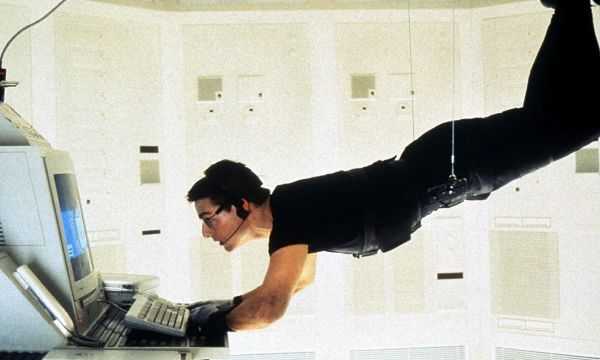
 The original, and probably the finest of the original 3 movies. To be honest, the CIA break-in scene alone makes the film stand tall. But it is so much more then that! Brain De Palma creates a cerebral thriller which not only had several action scenes, but also moments that required you to pay attention to a plot which could get complex, but it pays off in the end. Watching it for the first time when i was younger, the film was rather messy, but its on future viewings when you can really appreciate how all the plot points come together, and the end game is revealed. It’s startling how different this film is, compared to it’s direct sequel. There’s no slow motion, no corny action, just pure suspense!
 It’s probably fair to split the franchise into 2 parts. The first 3, then the following films. Both Rogue Nation, and Ghost Protocol have been by the biggest success of the series, and it’s not hard to see why! It’s a difficult decision in deciding which one I prefer, but personally, one scene in GP probably tips it in its favour. But make no mistake, RN is still not only one of the best MI films, but probably one of the most polished action films in recent times. The opening scene involving the plane taking off is ridiculously well done, and edge of your seat stuff. Though the scenes during the Opera at the Vienna Opera House is personally one of my favourite scenes in film. The entire scene goes perfectly with ‘Nessun Dorma’ being preformed in the background, the choreography is simply amazing.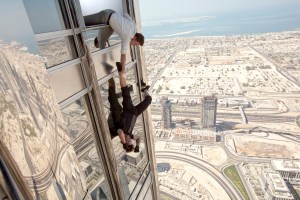
 Silver Screen Show